
What are the disadvantages of stainless steel pipe?
7 Key Disadvantages of Stainless Steel Pipe: 1 Reliable Procurement Guide
Understanding the disadvantages of stainless steel pipe is essential for project procurement managers evaluating long-term material efficiency. While stainless tubing offers excellent corrosion resistance and mechanical strength, specific application limits require careful engineering trade-offs. Overseas buyers often encounter budget overruns, installation delays, or galvanic corrosion when material properties are mismatched with jobsite requirements. As a global steel supplier, YIER provides transparent material audits to help international contractors make informed purchasing decisions. This technical guide analyzes the primary challenges associated with stainless tubular products and outlines practical mitigation strategies for industrial projects.
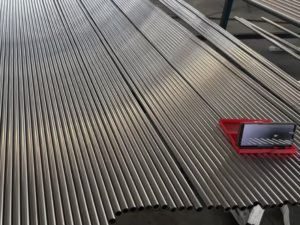
Higher Upfront Material Costs Compared to Carbon Steel
Evaluating total project budgets highlights initial capital outlay as one of the primary disadvantages of stainless steel pipe systems. High concentrations of alloying elements such as nickel, chromium, and molybdenum drive raw material prices significantly above carbon steel alternatives. For budget-sensitive utility infrastructure, specifying 316L stainless steel over galvanized steel can increase upfront piping expenses by three to four times. Procurement teams must evaluate whether long-term maintenance savings justify higher initial investment in non-corrosive fluid transmission lines. Contractors operating under tight capital limits often select low-alloy carbon steel for dry, non-corrosive indoor structural frameworks.
Machining and Fabrication Challenges Due to Work Hardening
Working directly with austenitic grades reveals cutting, threading, and end-beveling complexity as notable disadvantages of stainless steel pipe manufacturing. Austenitic stainless alloys exhibit high work-hardening rates, causing rapid tool wear during high-speed CNC machining or field cutting operations. Machinists must utilize heavy-duty carbide tooling, lower cutting speeds, and continuous coolant application to prevent surface galling. Our mill technicians follow strict metallurgical guidelines compliant with ASTM International standards to deliver pre-beveled pipe ends for jobsite assembly. Proper tool geometry and feed control remain essential to eliminate thread tearing during field installation.
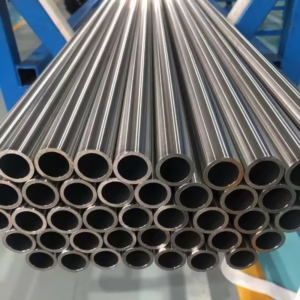
Susceptibility to Stress Corrosion Cracking in Chloride Environments
Exposing standard 304 or 316 tubing to warm marine spray or high-chloride chemicals highlights environmental vulnerability among the disadvantages of stainless steel pipe. Chlorides penetrate passive chromium oxide films, triggering localized pitting and sudden stress corrosion cracking under tensile loads. Operating in coastal desalination plants requires careful material selection to avoid premature structural failures across exposed piping runs. Laboratory technicians verify chemical compositions according to ISO Standards guidelines to ensure correct molybdenum ratios for harsh marine exposure. Upgrading to duplex stainless steel alloys prevents chloride-induced stress cracking in high-temperature chemical processing lines.
Galvanic Corrosion Risks in Dissimilar Metal Connections
Connecting stainless tubular lines directly to carbon steel fittings creates galvanic corrosion risks that rank among the critical disadvantages of stainless steel pipe installations. Because stainless steel possesses a noble cathodic electrical potential, direct contact accelerates sacrificial anode corrosion on adjacent carbon steel components. Moisture film accumulation across mixed-metal pipe joints leads to rapid localized wall thinning on carbon steel flanges and valves. Installing dielectric isolation gaskets and insulated bolt sleeves prevents electrical current flow between dissimilar metal interfaces. Engineering teams must design complete isolation protocols when integrating stainless lines into existing carbon steel piping networks.
Higher Overall Weight Compared to Lightweight Aluminum Alloy Tubing
Comparing structural density highlights total weight as one of the operational disadvantages of stainless steel pipe for transport applications. Stainless steel possesses a density of approximately 7.93 g/cm³, making it nearly three times heavier than equivalent aluminum alloy piping systems. Heavy piping runs increase structural support framework requirements and elevate shipping costs for long-distance international freight. Aerospace and automotive engineers frequently choose lightweight aluminum tubing to maximize payload efficiency where extreme corrosion resistance is unnecessary. Evaluating mechanical load requirements helps engineers balance structural strength against total assembly weight.
Difficult Welding Requirements and Vulnerability to Intergranular Corrosion
Field joining complexity represents one of the most technical disadvantages of stainless steel pipe project execution. Improper welding heat input precipitates chromium carbides along grain boundaries, depleting corrosion resistance within heat-affected zones. Welders must utilize purge gases such as argon to protect internal pipe root beads from atmospheric oxidation during TIG welding operations. Selecting low-carbon variants like 304L or 316L eliminates sensitization and protects joint integrity during continuous field welding. Certified weld procedures guarantee structural longevity across pressure-retaining industrial piping systems.
Lower Thermal Conductivity for Heat Exchanger Systems
Analyzing heat transfer rates reveals thermal resistance as one of the engineering disadvantages of stainless steel pipe in condenser designs. Stainless steel exhibits lower thermal conductivity than copper or aluminum alloys, reducing heat transfer efficiency across boiler tubes. Heat exchanger manufacturers must increase total surface area or utilize thinner wall gauges to achieve required thermal performance. Engineers evaluate liquid purity requirements against thermal conductivity when selecting heat exchanger tube materials. Balancing material durability with heat transfer rates ensures reliable performance in power station cooling systems.
Strategic Steel Procurement Solutions with YIER Manufacturing
YIER provides global contractors with comprehensive steel supply solutions tailored to complex engineering specifications. Our catalog includes seamless carbon steel pipes, structural H-beams, galvanized steel coils, and heavy-gauge structural plates. Sourcing multiple metal categories directly from 1 integrated factory partner lowers ocean shipping expenses and simplifies customs clearance. Review our factory quality control protocols in our report on how YIER secures stainless steel pipe orders through 4-step QC audits, or explore our guide on 304 vs 316L vs 2205 duplex stainless steel selection criteria. Contact YIER’s technical engineering team today to request product catalogs, EN 10204 3.1 Mill Test Certificates, or a direct factory quotation.
Nhà sản xuất thép không gỉ Trung Quốc, cung cấp giải pháp cung cấp thép không gỉ cho khách hàng toàn cầu
Liên hệ với chúng tôi
CÔNG TY TNHH THÉP YIER (THIÊN TÂN)
Tầm nhìn & Sứ mệnh
Chúng tôi không ngừng nỗ lực tập trung vào cải tiến sản phẩm thép không gỉ và hợp kim cũng như dịch vụ khách hàng, cung cấp các giải pháp cung cấp thép không gỉ và hợp kim hoàn chỉnh cho khách hàng trên toàn thế giới.